
KeyPels

CRM Development

A CRM Your Team Actually Wants To Use

Custom CRM platforms that centralise customer data, mirror how your pipeline really works, and remove the spreadsheets your team quietly keeps on the side.

  • Custom data models
  • Pipeline automation
  • Reporting & forecasting
  • Two-way integrations
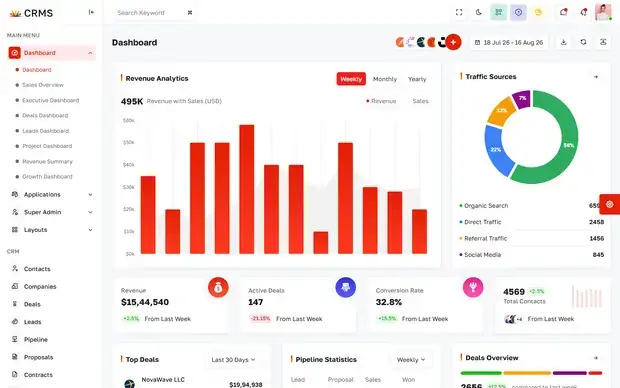
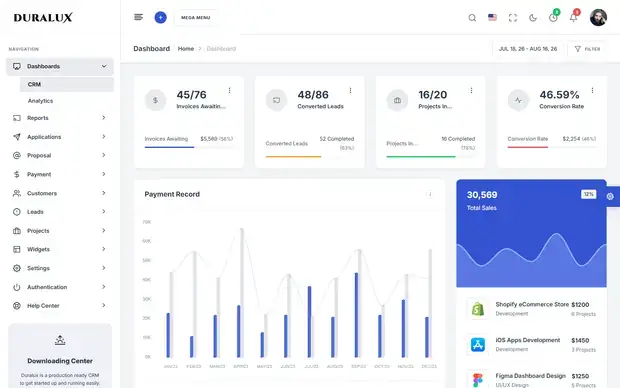
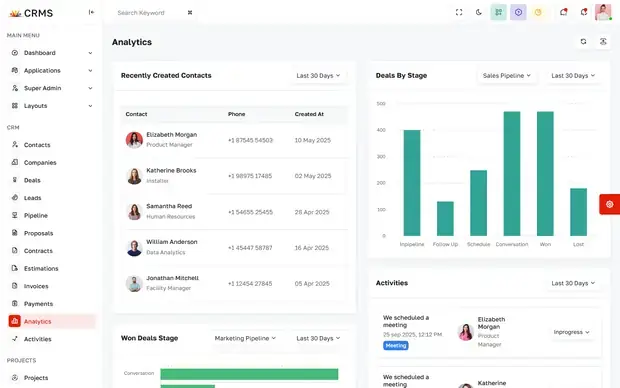
CRM pipeline dashboard
  • 0Source of truth for customer data
  • 0Fields shaped to your process
  • 0Per-seat licence lock-in
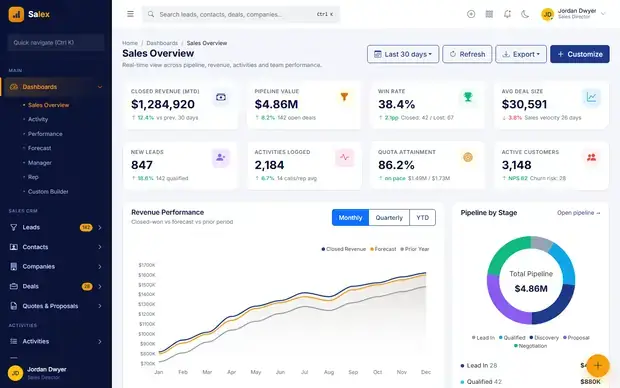
Sales overview dashboard

The problem with off-the-shelf

Most Teams Do Not Outgrow Their CRM — They Work Around It

The tell-tale signs are always the same: a shadow spreadsheet, a naming convention nobody documented, three fields that mean the same thing, and a weekly report someone rebuilds by hand. The tool did not fit the process, so the process quietly bent around the tool.

We start from your actual pipeline — the stages, the handoffs, the approvals, the exceptions — and build a platform around it. Data model first, then automation, then the reporting your leadership team has been assembling manually.

  • A data model that fits

    Entities, relationships and lifecycle stages that match your business, not a template built for someone else’s.

  • Workflow automation

    Assignment rules, follow-up triggers, approvals and escalations that run without anyone remembering to.

  • Reporting leadership trusts

    Pipeline, forecast, cohort and activity reporting built on one dataset instead of five exports.

  • Connected to everything else

    Two-way sync with email, calendars, billing, support and the marketing stack you already run.

What we build

CRM Services End To End

Whether you need a platform built from scratch, an existing CRM extended, or years of messy data migrated cleanly.

Sales & Pipeline CRM

Deal pipelines, activity tracking, quotas and forecasting shaped around how your reps actually sell — with the admin burden automated away so the data stays current without nagging.

  • Custom pipeline stages and deal logic
  • Lead scoring and routing rules
  • Quota tracking and forecasting
  • Activity capture from email and calendar
Discuss this
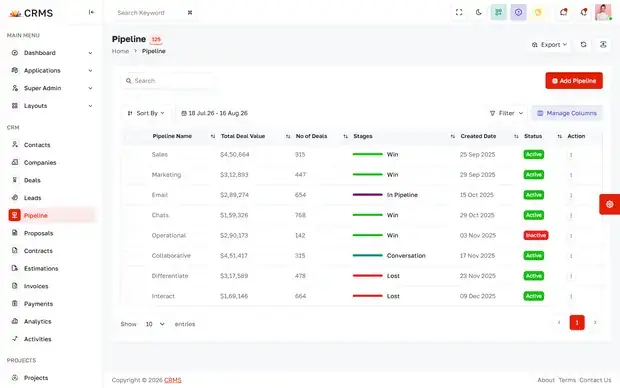
Sales pipeline board

Engagement models

Ways To Approach A CRM Build

Three routes depending on whether you are extending, replacing or starting fresh.

For a focused fix

CRM Extension

Best for teams whose CRM is fundamentally right but cannot express how they actually sell.

from $549 /month

Custom logic, apps and integrations on top of the CRM you already run.

  • Workflow and automation build-out
  • Custom objects, fields and views
  • Two-way integrations with core systems
  • Reporting and dashboard development
  • Admin handover and documentation
Start Your Project
For continuous change

Platform Partner

For organisations adding products, regions or teams faster than a project engagement can keep up with.

from $1,899 /month

An ongoing team for iteration, new modules and data operations.

  • Prioritised monthly delivery queue
  • New modules and team onboarding
  • Data quality and integration monitoring
  • Reporting and forecast refinement
  • Quarterly roadmap and review
  • Agreed response and resolution times
Talk to Our Team

Sitting on years of messy data?

Migration is usually the part teams underestimate. We can run a standalone data audit first — deduplication, relationship mapping and a validated migration plan — before any platform decision is made.

Talk it through

How we work

From Messy Spreadsheets To One System

A migration path that keeps the business running while the new platform takes over.

  1. 01

    Process Mapping

    We sit with the people who use the system daily and document the real workflow — including the workarounds nobody admits to in a kick-off meeting.

  2. 02

    Data Model Design

    Entities, fields, relationships and permissions designed and reviewed before any interface work begins.

  3. 03

    Build & Automate

    Interface, business logic and automation delivered in short cycles, with a working environment your team can trial early.

  4. 04

    Migrate & Validate

    Historical data cleansed, deduplicated and imported, then reconciled against source records before cutover.

  5. 05

    Adopt & Improve

    Training, rollout support and a change queue for the refinements that only surface once real work runs through it.

Outcomes

What Changes After Go-Live

The operational differences clients report once one system holds the truth.

  • One customer record

    Sales, service and finance looking at the same history instead of three partial versions of it.

  • Hours back each week

    Manual data entry, status chasing and report assembly automated out of the working day.

  • Forecasts you can defend

    Pipeline maths driven by consistent stage definitions rather than optimistic gut feel.

  • Governance built in

    Permissions, audit trails and retention rules that satisfy legal without slowing the team.

  • AI where it earns its place

    Summarised call notes, drafted follow-ups and next-best-action prompts inside the workflow.

  • Room to change

    New products, regions and team structures added by configuration, not another vendor project.

FAQ

CRM Development Questions

Still unsure? Send us a note — we reply personally.

Buy when your process is genuinely standard — an off-the-shelf CRM will be cheaper and faster. Build when the workarounds are already costing you: shadow spreadsheets, fields repurposed to mean something else, reports rebuilt by hand every week, or a process the tool simply cannot express. We will tell you honestly which situation you are in.

Yes. A large share of our CRM work is extending platforms clients already own — custom objects, automation, integrations and apps that sit on top. Replacing a CRM is only worth it when the platform itself is the constraint.

With an audit first: what records exist, which are duplicates, what relationships must survive and what can be archived. We then run staged imports into a test environment and reconcile against source data before cutover, so you can verify the numbers rather than take our word for it.

A focused extension of an existing CRM is usually 4–8 weeks. A full custom platform with migration and rollout typically runs 4–6 months, delivered in phases so an early version is in real use well before the final one.

Adoption is a design problem before it is a training problem. We build with the people who use the system daily, get a working environment in front of them early, and remove admin steps rather than adding them. Training and a change queue for the first weeks are part of every rollout.

Yes — call and email summarisation, drafted follow-ups, lead scoring, next-best-action prompts and natural-language reporting. We add them where they save real time inside an existing workflow, not as a bolted-on chat window nobody opens.

You do. We build in your cloud accounts and your repository wherever possible, with full documentation at handover. There is no per-seat licence to us and no proprietary platform to be locked into.

Ready To Retire The Spreadsheets?

Show us how your pipeline really works — including the workarounds. We will map what a system built around it would look like.